
Showing only transactional keywords:
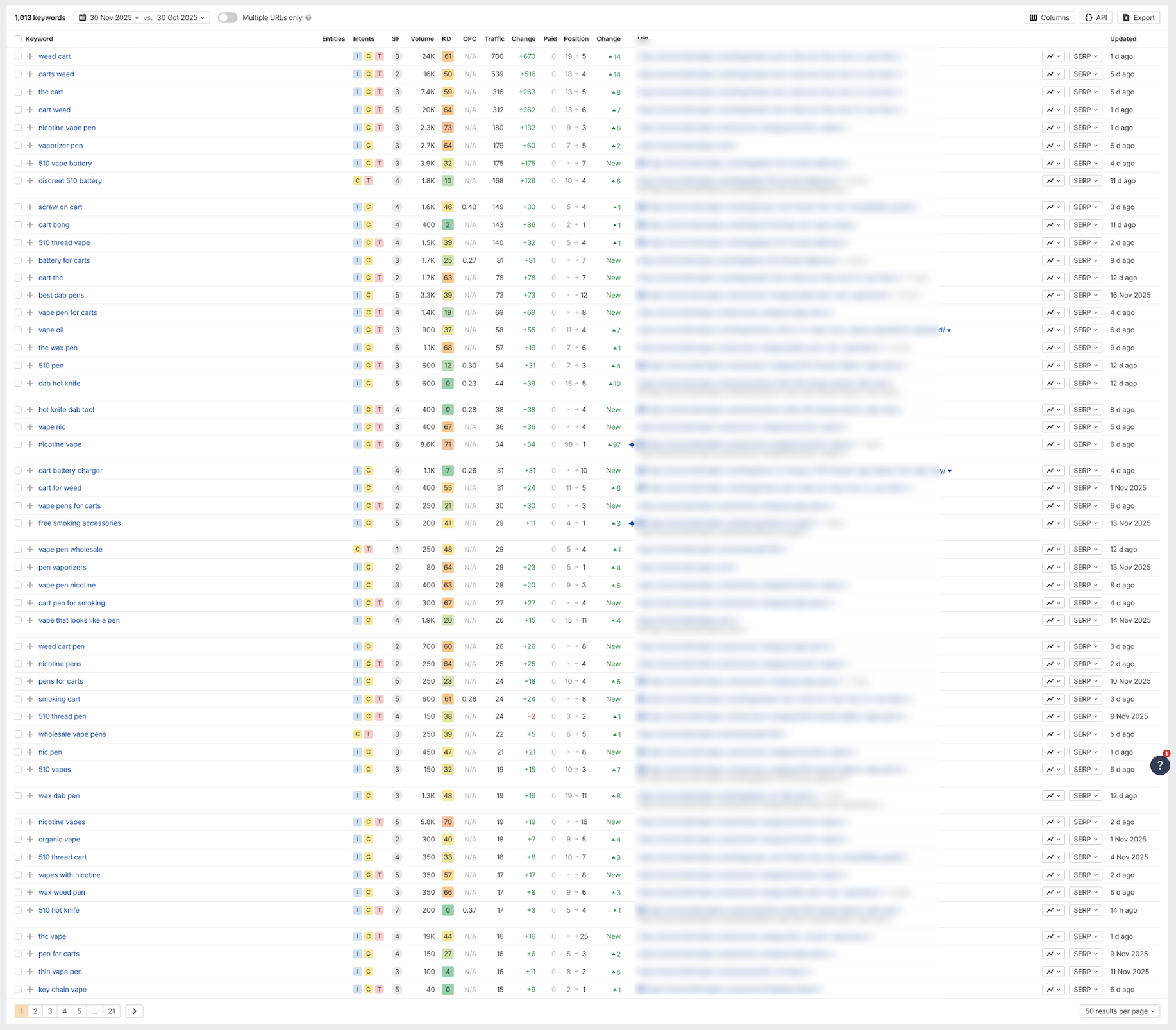
Most vape pen stores fight for scraps on Google’s second page. This store now dominates page one for every major keyword.
The secret? They had no product category pages. Zero navigation structure. We built both from scratch. Here’s how we did it in one year.
The Starting Point: Traffic Without Buyers
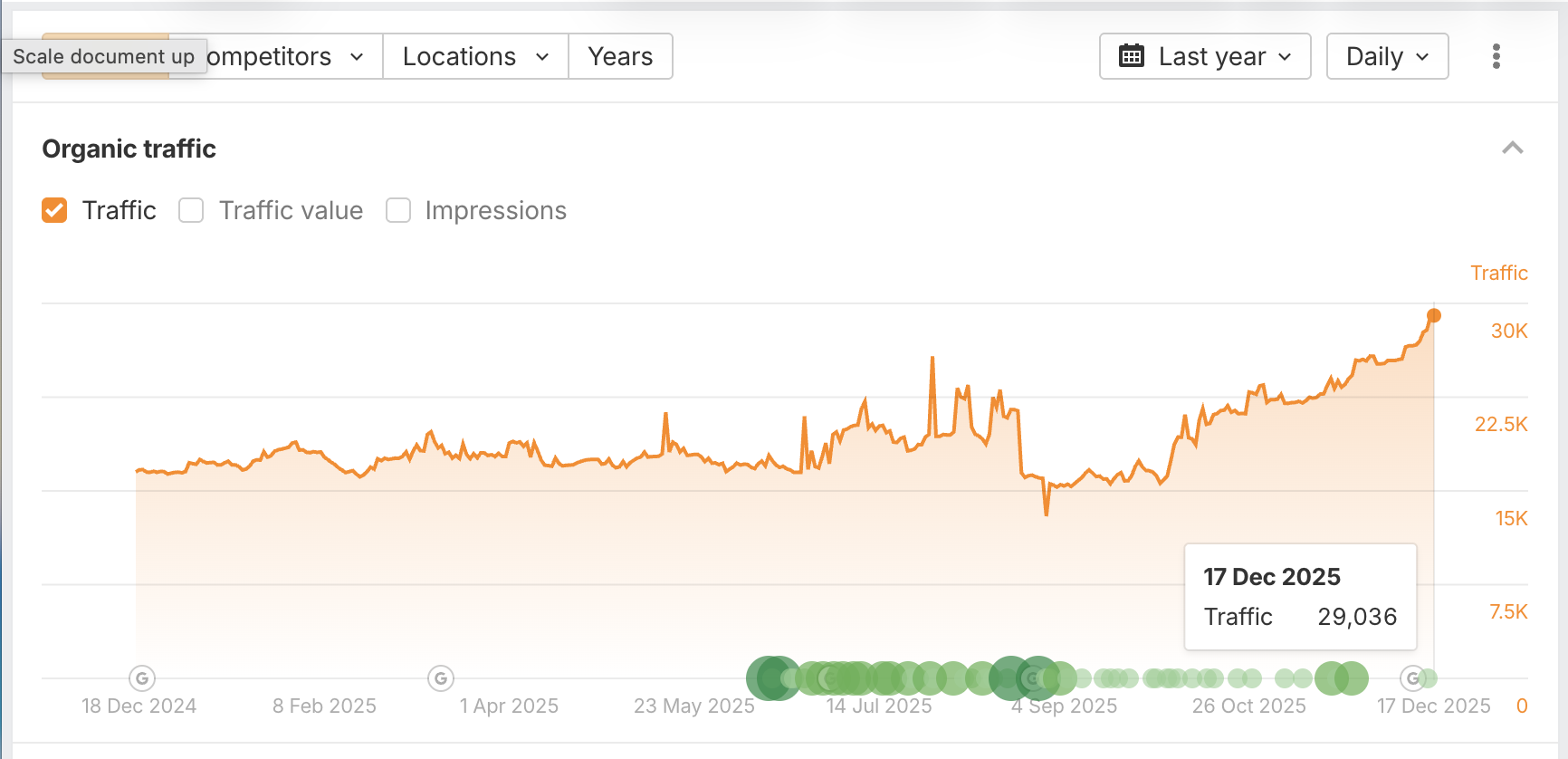
In November 2024, the store had decent traffic. About 17,543 monthly visitors according to Ahrefs. But they weren’t ranking for keywords that buyers search for.
The real problem? No proper product category pages. The navigation menu was a mess. Products were scattered across the site with no clear organization or structure.
The site ranked for informational terms. Random product names. Long phrases nobody searches. They had zero product categories targeting transactional keywords that buyers actually use.
Before:
- 1-3 rank positions: 759
- 4-10 rank positions: 2,065
Keywords like “vape pen” and “vaporizer pen” barely ranked. These are the terms buyers use when ready to purchase. Without optimized category pages in the navigation, competitors owned positions 1-5 for every money keyword.
Phase 1: Foundation Work – Fixing What Was Broken
Every successful SEO campaign starts with fixing technical problems. We ran a full audit and found broken links everywhere. Redirects pointed to dead pages. The site structure made no sense.
Technical Fixes:
- Redirected all broken backlinks
- Fixed internal link errors
- Reduced crawl depth across the site
- Optimized page speed and mobile performance
- Implemented schema markup for products
These fixes took two weeks. Small changes that make huge differences. Google’s crawlers could finally understand the site properly.
Phase 2: Keyword Strategy – Going After Quick Wins
We didn’t chase “vape pen” first. That keyword is too competitive. Instead, we went after long-tail keywords that buyers actually search for.
Our Keyword Approach:
Start with specific product keywords:
- “510 thread battery”
- “510 thread vape pen”
- “vaporizer pen”
- “vaporizer pens”
These keywords have lower competition but high buyer intent. People searching these terms want to buy right now. Perfect for quick wins and early momentum.
Phase 3: Product Category Pages – The Money Makers
The site had no product category pages. This was the biggest problem. Most stores ignore their category pages. This store didn’t even have them.
Category pages rank faster than blog posts. They convert better than informational content. They’re pure money. And this site had zero.
What We Did:
Built product category pages from scratch for each keyword target. Added the target keyword to the URL slug, title tag, and meta description. Wrote detailed content for every category page explaining the products.
Created a proper navigation menu structure. Added every new category page to the main menu. This got them indexed by Google fast. It also made the site easier for customers to browse.
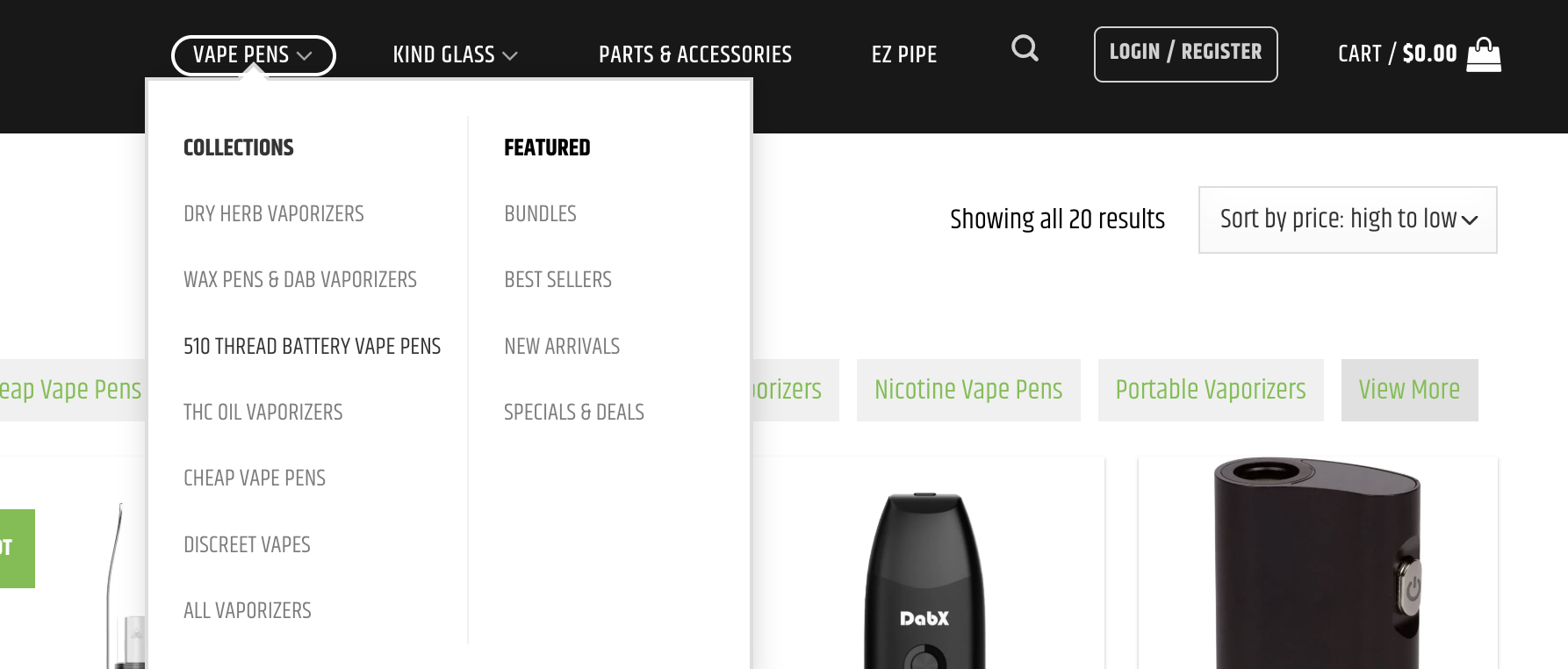
Each page got 500-600 words of content. Not fluff. Real information buyers need. How to choose the right battery. Differences between models. What works best for different situations.

Content Structure We Used:
Start with brand introduction and product line overview. Explain why these products are better than competitors. Give specific details about the product line features.
Go deeper into individual products next. Explain differences between important models. Tell buyers who each one works best for. Help them choose the right fit easily.
Finish with an FAQ section at the bottom. Answer the most common questions people ask. Include the target keyword in at least one heading.
Look for natural opportunities to link internally. Connect related category pages together. Build a web of relevant connections across the site.
Phase 4: Link Building – The Ranking Accelerator
Content alone won’t get you to page one. You need backlinks. We built them strategically. Every link to a category page got matched with links to the homepage.
Our Link Building Rule:
For every category page link, build 1-2 homepage links. This keeps your link profile looking natural. Google knows real sites have more homepage links than any other page.
We secured backlinks from relevant industry sites. Quality over quantity. Each link pointed to strategic pages. The homepage got the most. Category pages got enough to rank.

Results Speak:
Rankings started climbing within 60 days. Keywords moved from page 5 to page 2. Then page 2 to page 1. The momentum built month after month.
The Results: Numbers Don’t Lie

Traffic Growth:
Monthly organic traffic jumped from 17,543 to 26,853. That’s 9,310 more visitors every single month. All from Google. All free. All high-intent buyers looking for vape pens.
Keyword Rankings:
Keywords in top 10 positions exploded:
- Before: 1-3 rank positions: 759
- After: 1-3 rank positions: 1,846
- Before: 4-10 rank positions: 2,065
- After: 4-10 rank positions: 5,887
Total increase: 145% more top 10 keywords.
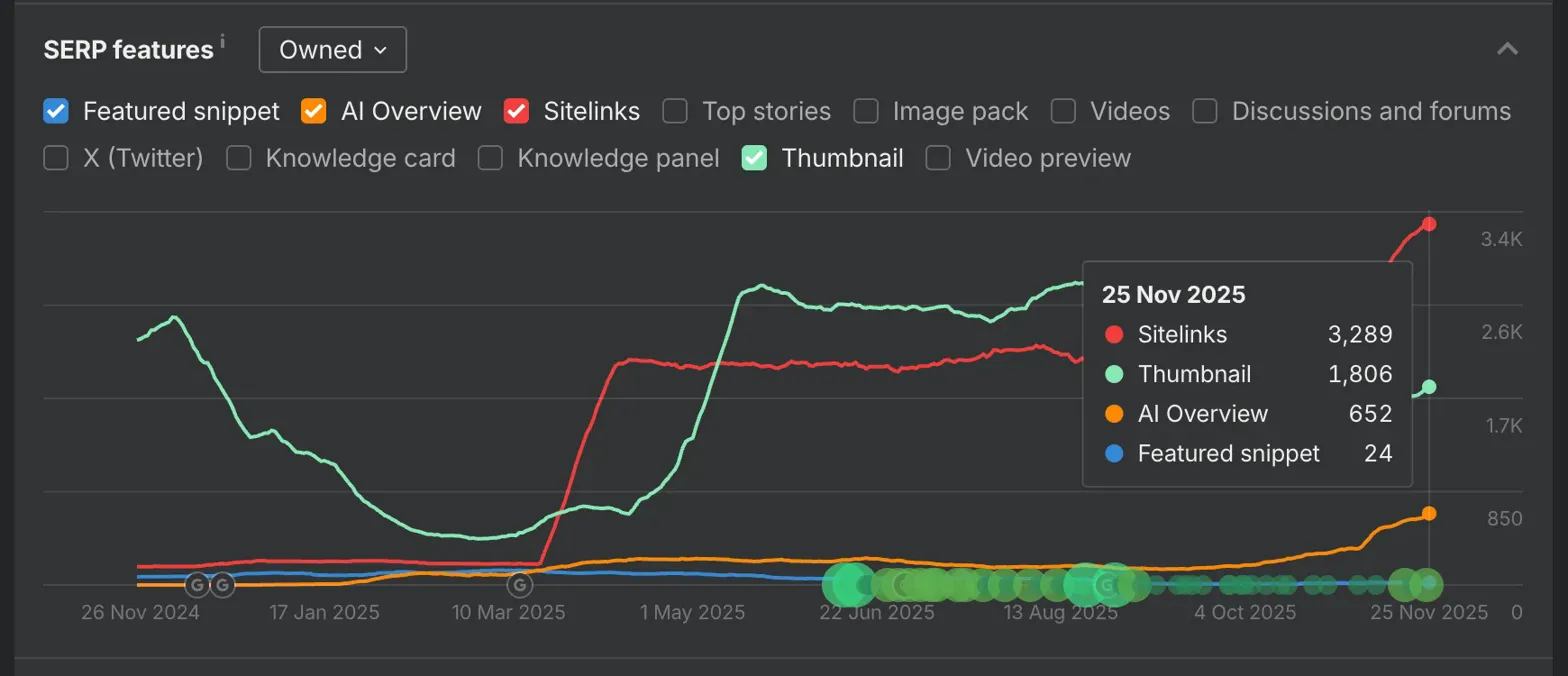
SERP Features Domination:
The real win came from SERP features. These are the special boxes Google shows at the top of search results. Product images. Featured snippets. Rich results.
- Before: 167 SERP features
- After: 3,289 SERP features
- Increase: 1,968%
This means the site shows up everywhere in search results. Not just regular listings. Special boxes. Image results. Shopping features. Complete domination.
Specific Keyword Wins:
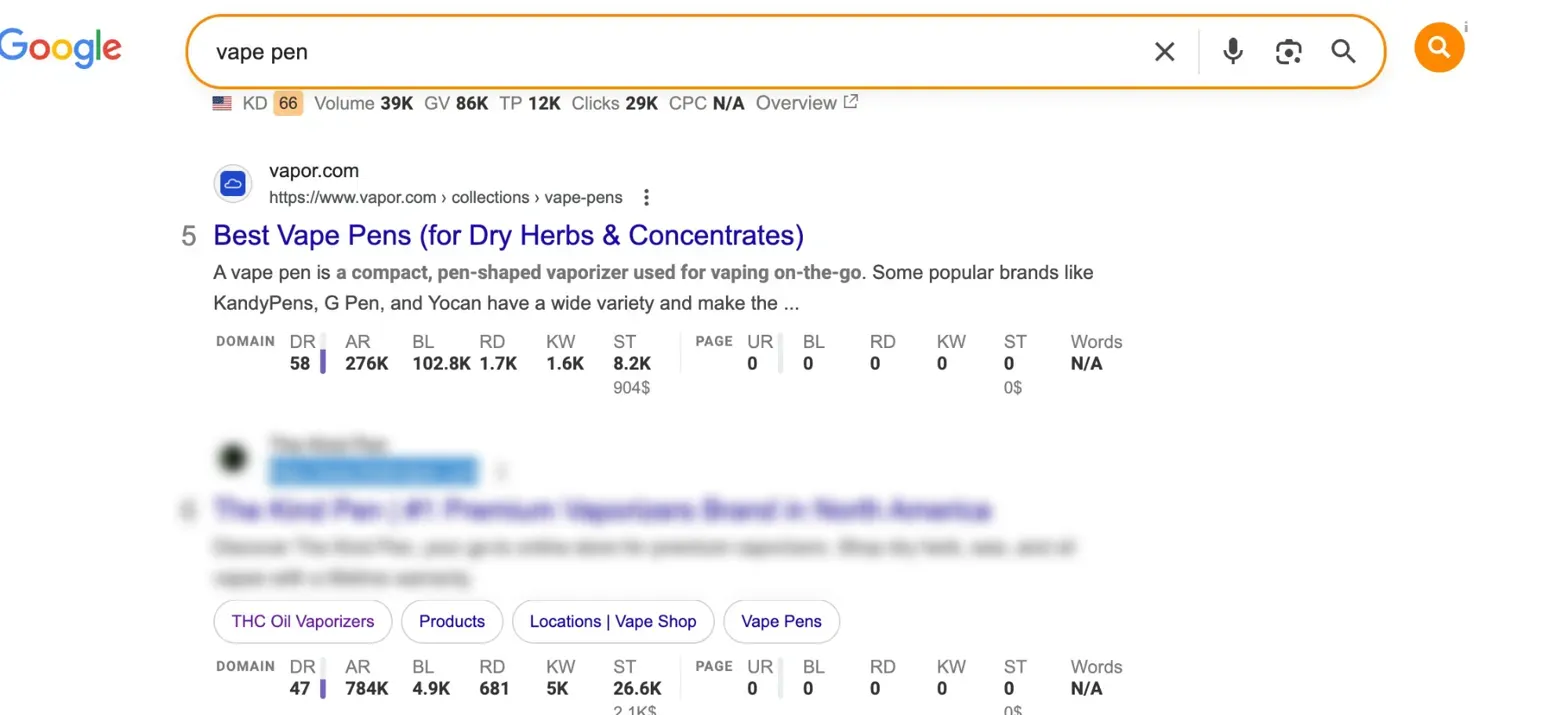
“vape pen” – moved from position 59 to position 5 “vaporizer pen” – moved from not ranking to position 1
“vaporizer pens” – moved from not ranking to position 1 “510 vape pen” – moved from not ranking to position 1 “510 thread vape pen” – moved from not ranking to position 2
Why This Strategy Works
Real Product Focus:
We optimized pages that sell products. Not blog posts about “what is a vape pen.” Product category pages convert. They make money. They rank faster than informational content.
Long-Tail First:
Starting with specific keywords builds momentum fast. “510 thread vape pen” is easier to rank than “vape pen.” Win the battles. Then win the war.
Natural Link Profile:
More homepage links than category page links. Just like every real website. Google’s algorithm expects this pattern. We gave them exactly what they wanted to see.
Content That Helps Buyers:
Every word on category pages helps people buy. No fluff. No keyword stuffing. Real information buyers need to make smart decisions about their purchase.
The Ongoing Strategy
This campaign isn’t finished. We’re still building. Adding more category pages. Creating content for new product lines. Building more high-quality backlinks every month.
Current Focus:
Expanding into related product categories. Optimizing for seasonal trends. Building more SERP feature opportunities. The rankings keep improving week after week.
Next Targets:
Push all top 5 keywords into positions 1-3. Add 50 more optimized category pages. Secure backlinks from major vaping industry publications. Double the SERP feature count to 6,000+.
Traffic will hit 40,000 monthly visitors within six months. Revenue keeps climbing with every ranking improvement. Organic search now drives most of the business.
What We Learned
SEO isn’t rocket science. It’s strategic work. Fix technical issues first. Target winnable keywords early. Optimize pages that make money. Build links the smart way.
Most stores fail because they chase big keywords too early. Or they write blog posts instead of optimizing product pages. Or they build spammy links that hurt rankings.
We did the opposite. Went after specific keywords. Optimized money pages. Built quality links strategically. The results prove the approach works.
Your store can do this too. Start with technical fixes. Find long-tail keywords in your niche. Optimize your category pages with real content. Build links the right way.
In 6-12 months you’ll dominate Google for every keyword that matters. Top 3 positions across the board. Traffic and revenue both climbing month after month.
While this case study demonstrates success across various ecommerce sectors, businesses operating in the B2B space often require specialized approaches to b2b ecommerce seo optimization that address longer sales cycles and complex buyer journeys.