Most UK kitchenware brands fight for scraps on page 2 of Google for “lunch box.” It’s the single biggest transactional keyword in their category — 14,000 UK searches every month, all from buyers ready to purchase.
Our client was stuck at position #14.
In under one month, we took them from #14 to #1 — overtaking Amazon and the major established kitchenware brands that dominate the category. Plus dozens of related rankings improved or landed on page 1 for the first time.
Here’s exactly how we did it — and why it happened so fast.
The Starting Point: A Strong Foundation Most Agencies Would Have Missed
Our client is a UK eco-kitchenware brand. Stainless steel lunch boxes, water bottles, washing up bowls — built to help the UK undo its plastic habits. B Corp certified, established customer base, real organic press mentions.
The brand was already doing better than they realised:
- 412 keywords already ranking on page 1 of Google
- #1 for “lunchbox” (one word), “spork,” and several other niche terms
- #1 for a single blog post (“how to clean stainless steel water bottle”) — driving 2,500+ visits a month from a single piece of content
That last data point is the key to this entire case study. A blog post pulling 2,500 visits a month means the domain has real authority — Google trusts it. Most “stuck on page 2” sites don’t have that signal at all.
But despite the existing foundation, the brand was invisible for the keyword that mattered most.
“Lunch box” — 14K monthly UK searches. Position #14.
Position 11–20 is the worst place a brand can rank. You’re not on page 1 where buyers find you, but you’re close enough that you keep doing the same things expecting rankings to eventually move.
They won’t.
The brand had been stuck on page 2 for years. To compensate, they were burning around £5,000/month on Google Ads to capture the same searches they should have owned organically.
The Diagnosis: Where the Gap Was Hiding
We pulled the full keyword and competitor data before recommending anything:
- 127 keywords stuck past page 1
- 66,000+ monthly searches the brand was missing every single month
- 161 keywords their bigger competitors (Black+Blum, Sistema, Klean Kanteen, Ion8) were ranking for that the brand wasn’t even appearing in
The conclusion was clear: this wasn’t a domain authority problem (the foundation was there) and it wasn’t a brand problem (they were already category leaders in their niche). It was a page-level execution problem on the highest-value collection pages — including the one that should have been winning “lunch box.”
Three specific bottlenecks stood out:
1. The lunch box collection page wasn’t built to win “lunch box.” The title tag, H1, and on-page content all pointed to broader, softer terms. Google had no clear signal that this page deserved the most competitive keyword in the category.
2. A toxic backlink profile was suppressing the entire domain. A site-wide audit flagged 243 spam domains pointing to the brand — an SEO directory farm spinning identical “directory list” pages across dozens of low-DR sites, plus parasitic article-spinning sites and outright link-selling spam. None of it had been touched in years.
3. The lunch box collection wasn’t getting enough internal authority. The site’s strongest pages weren’t pointing to it, and the navigation buried it under generic sub-categories.
Three problems. Month 1 of the campaign was scoped to attack the first two head-on, alongside foundational technical work.
What We Did in Month 1
The Month 1 plan had four parts: technical audit & fixes, toxic link cleanup, optimize the four highest-leverage pages including the lunch box collection, and Google Merchant Center setup.
Technical Foundation
A full technical audit ran in the first week. Crawlability, indexing, structured data, Core Web Vitals, broken links, broken backlinks, schema. Every issue that could plausibly hold a page back was logged and triaged. The most impactful fixes shipped first.
This is the unglamorous work most agencies skip past. But until Google can crawl, parse, and trust every product page properly, page-level optimization gets you a fraction of what it should.
Disavowing the Toxic Backlink Profile
In parallel, every backlink was audited against Ahrefs spam signals and manually reviewed. 243 confirmed spam domains made the disavow list. Five borderline cases — a legitimate coupon aggregator, an editorial blog, a sustainability publication, and two others — were excluded so we didn’t accidentally disavow real links.
The disavow file went to Google Search Console within the first 48 hours of the campaign.
Google takes time to fully re-evaluate a backlink profile after a disavow — but the effect is unblocking pages that have been algorithmically suppressed. For a domain with real authority sitting underneath a toxic link cloud, this alone can move rankings significantly.
Optimizing the Lunch Box Collection (and Three Other Low-Hanging Fruit Pages)
The lunch box collection was one of four pages we rebuilt in Month 1. Every page-level signal got rewritten:
- Title tag rewritten to lead with the exact target keyword
- H1 and on-page copy aligned to mirror search intent
- Product grid content expanded to give buyers the information Google was already showing in “People Also Ask” — material safety, leak resistance, sizing
- Schema markup implemented properly so Google could parse the page structure
- Navigation restructured so the lunchbox category surfaced higher in the menu
The same optimization pattern was applied to the other three priority pages — chosen from the low-hanging fruit list of keywords already ranking just below page 1.
Google Merchant Center
Merchant Center was set up and optimized in parallel — feeding clean product data to Google’s free shopping listings and Performance Max campaigns the brand was already running.
The Result: 30 Days, #1 Across the Board
Rankings moved faster than expected.
Within two weeks, “lunch box” had jumped from page 2 onto page 1. By day 28, it hit #1 — overtaking Amazon and the major established competitors in the UK kitchenware category for the biggest transactional keyword in their space.
But “lunch box” was just the headline win. The same Month 1 work pulled an entire keyword cluster up alongside it:

#1 rankings won:
- “lunch box” — 14K monthly volume
- “tiffin box” — 1.8K
- “metal tupperware” — 300
- “salad box” — 600
- “sandwich boxes” — 300
- “stainless steel lunch boxes” — 100
#2 rankings won:
- “lunchbox” — 3.4K
- “lunchboxes” — 450
Plus 50+ more keywords either improved into the top 10 or landed there for the first time within the same window.
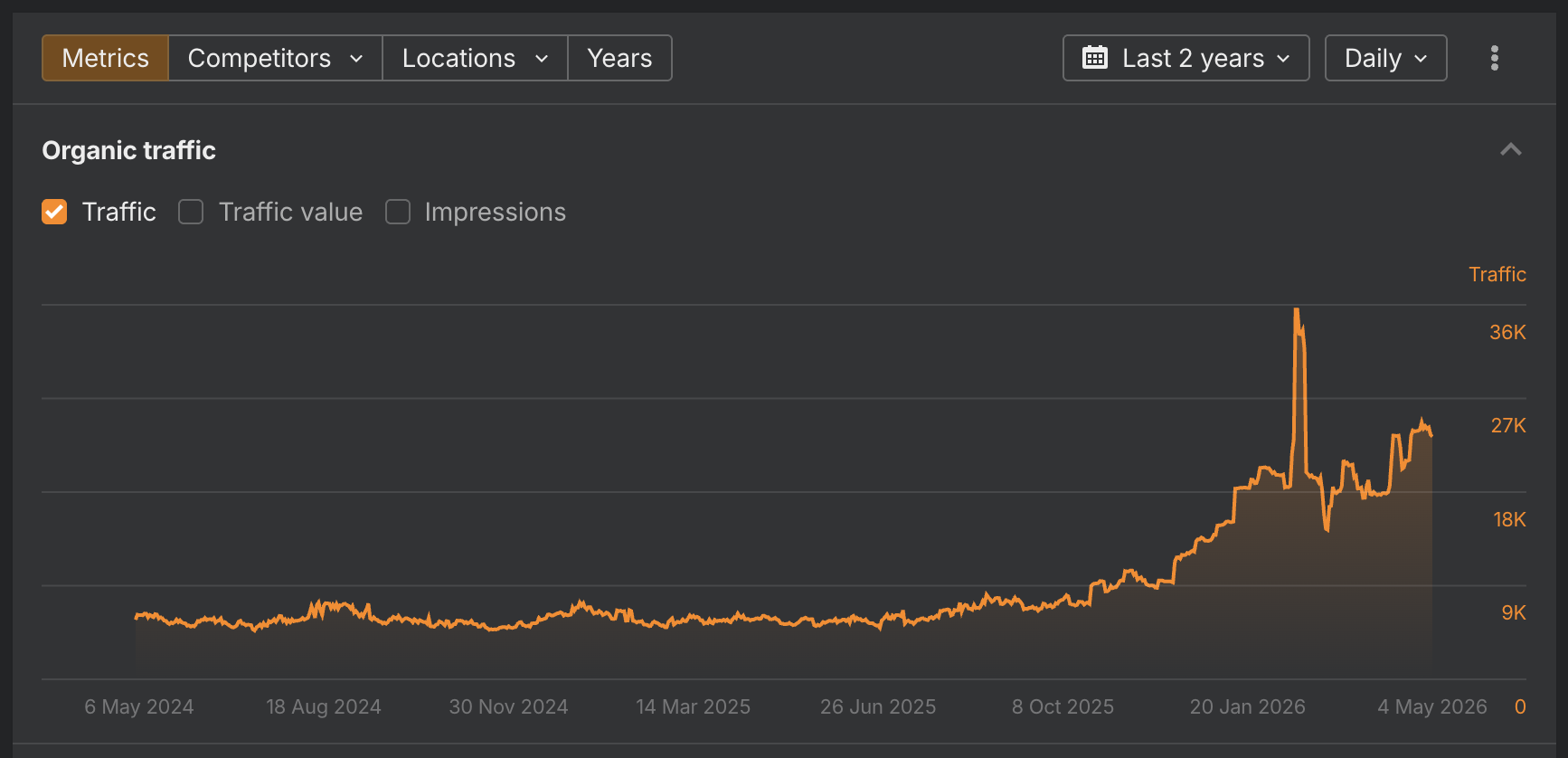
The lunch box collection page alone added 1,141+ new monthly organic UK visits from this one keyword cluster — traffic that used to require paid ads.
Why It Worked in 30 Days (And Won’t, for Most Sites)
Most SEO campaigns take 6–12 months to move a major keyword. Most agencies treat every site like a blank slate: audit everything, fix everything, build everything from scratch.
That’s wasteful when the brand already has authority — which most established eCommerce brands do.
This client was sitting on years of brand equity. 412 keywords on page 1. A blog post pulling 2,500 organic visits a month from a single search query. Real backlinks from real publications. The foundation was already strong — it had just been held back by specific, fixable bottlenecks.
We identified them, fixed the highest-leverage ones in Month 1, and the existing authority did the heavy lifting once we got out of its way.
That’s the entire Veda Digital playbook in one sentence: find the exact bottleneck holding the page back, fix it precisely, and let the brand’s existing equity carry the rest.
It’s what separates the best ecommerce seo services from generic campaigns that take six months to deliver what a focused strategy achieves in one.
What’s Continuing Through the Rest of the Campaign
This was Month 1 of a 12-month engagement. With “lunch box” now locked in at #1, the rest of the campaign is scoped around scaling the win across the full product catalog:
- Months 2–4: Internal linking overhaul — routing site-wide authority into the highest-revenue collection pages, rebuilding the linking structure across the whole site
- 4 pages optimized every month — new pages created for gap keywords (water bottles, meal prep containers, bento boxes), existing pages reoptimized
- 10 backlinks every 4 months — high-quality links acquired from relevant publications in the brand’s category
- Topical content map across the blog — clusters built around lunchbox ideas, material safety, cleaning guides, brand comparisons, and meal prep — all feeding internal authority back into the money pages
- Quarterly technical audit refreshes to catch and fix new issues as the site grows
Each new ranking compounds the last. The page that ranks #1 for “lunch box” today gets harder to dethrone every month — supported by more interlinked pages, more authoritative backlinks, and a deeper topical moat than any competitor can match.
That’s how organic compounds. And it’s why the brands that win on Google aren’t always the ones with the biggest budgets — they’re the ones who fix the right things, in the right order, at the right time.
Campaign Duration to first #1 ranking: Under 30 days Result: #14 → #1 for “lunch box” (14K UK monthly volume) + 50+ keyword wins across the cluster